The break sets the tone for every board. Arun shows two reliable methods from the left base circle — and when to try the reverse break for a slam chance.
Break from Left Base Circle
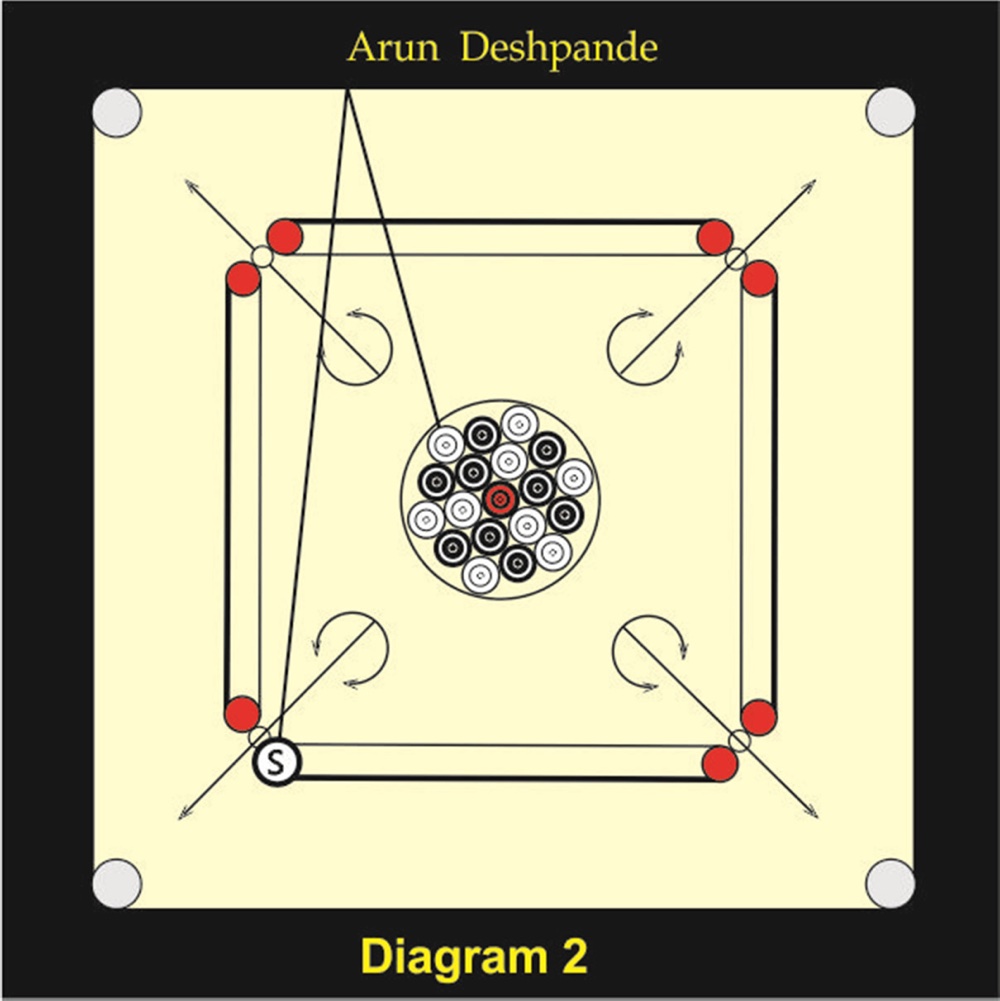
Striker on the left base circle; aim so it passes through the first arrow of the opposite left half circle. Prefer scissor or flat grip.
This method is the best method and is used by the majority of the players. Many players take blind aim from the opposite frame for the break. If you place your striker on the left base circle then your striker should pass through the first arrow of the opposite left half circle as shown in the above figure. You can see the actual point from where your striker should pass and therefore you can play the stroke accurately. If you don’t use this method and try to take an imaginary point on the opposite frame then there is a chance of varying this imaginary point, resulting in failure of the break. This break should be made preferably by scissor grip or by any flat grip.
Break from Near the Left Base Circle
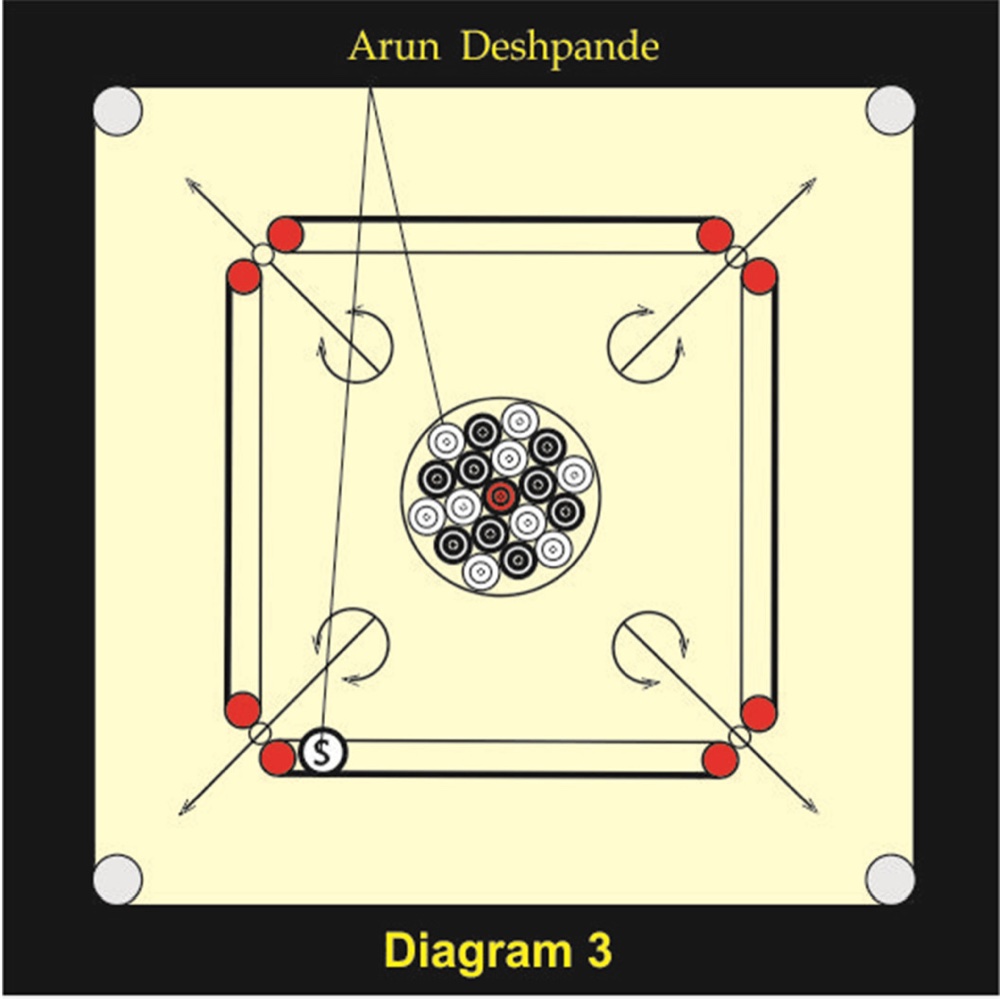
When fouling from the circle is a worry — play from near the base circle; striker passes through the second arrow of the opposite left half circle.
If you are afraid of playing the stroke from the left circle due to a possibility of making a foul then you can play from near the base circle. In this method your striker should pass through the second arrow of the opposite left half circle as shown in the above figure. This break also should be made by scissor grip or any flat grip.
Reverse Break
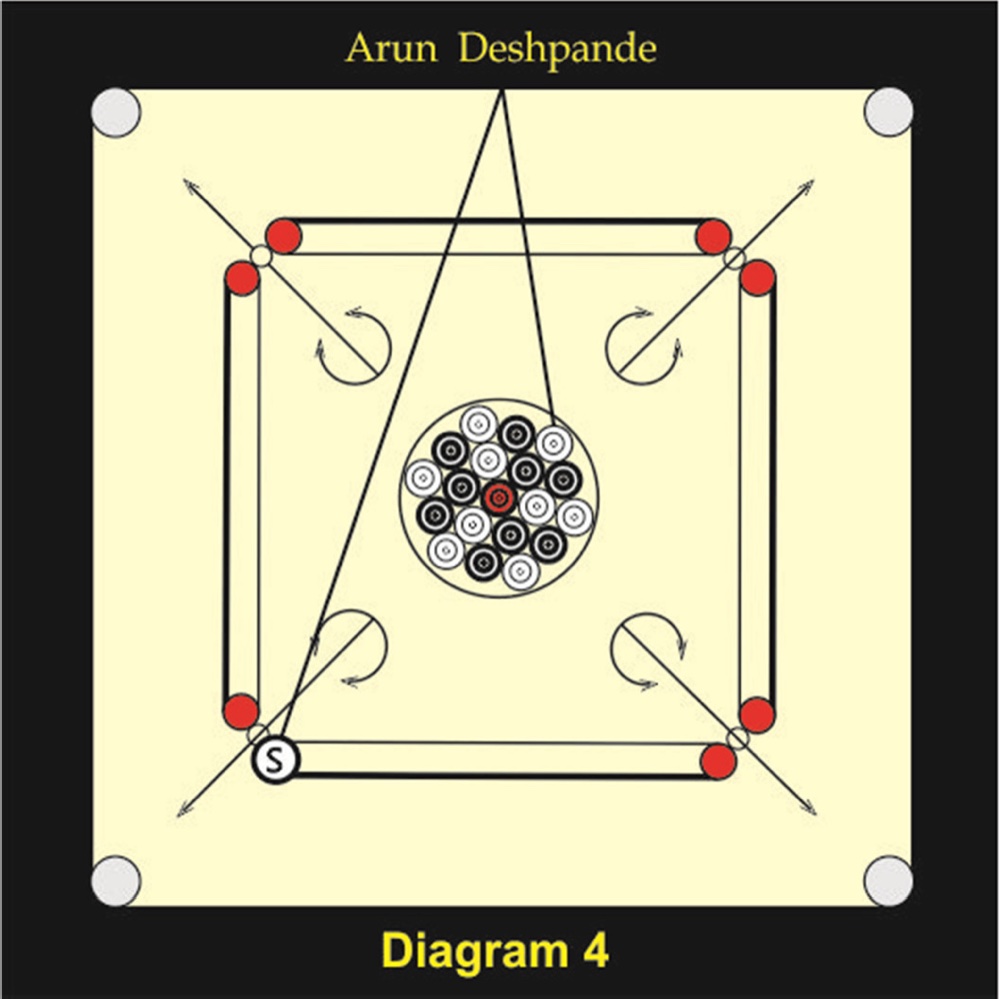
Arrange a shot to your left pocket and break from the left side. A good break can leave a four-coin bunch for a touch stroke and a white slam chance.
In this type of break you can arrange a shot of the break to your left pocket and break from the left side. If you break accurately then you will notice that there remains a bunch of four coins in such a way that you can play a touch stroke and open the board, thereby getting a chance for a white slam.
If you fail to break correctly, you may hit other coins or your striker may just touch your aimed white coins — a bad break and a lost opportunity.